How Hard Is the Inca Trail? Difficulty by Day and Training Plan
How hard is the Inca Trail? It is a moderate to challenging trek: no climbing skills are needed, but it covers about 26 miles (42 km) over 4 days and crosses a pass at 13,828 ft (4,215 m). Most healthy hikers who train and acclimatize in Cusco finish it comfortably.
Quick summary
- Total distance: about 26 miles (42 km) over 4 days and 3 nights.
- Day 2 is the hardest, with the climb to Dead Woman’s Pass (13,828 ft / 4,215 m).
- Day 3 is the longest and has many downhill stone steps.
- Altitude is the biggest challenge: spend 2 days in Cusco first.
- You do not need to be an athlete, but 2 to 3 months of training helps a lot.
Why the Inca Trail feels tough
The difficulty does not come from technical sections. It comes from three things combined: altitude, long climbs and stone steps. You hike for several days in a row and sleep in a tent at cold, high camps. For the full route, see our Inca Trail guide.
Difficulty day by day
| Day | Distance | Altitude | Level |
|---|---|---|---|
| 1 | ~7 mi (11-12 km) | Up to ~9,840 ft (3,000 m) | Easy to moderate |
| 2 | Long climb | Pass at 13,828 ft (4,215 m) | Hard |
| 3 | ~9-10 mi (15-16 km) | Passes at ~12,950 ft and ~12,040 ft | Moderate to hard |
| 4 | Short | Ends at ~8,920 ft (2,720 m) | Easy |
Day 1: warm-up
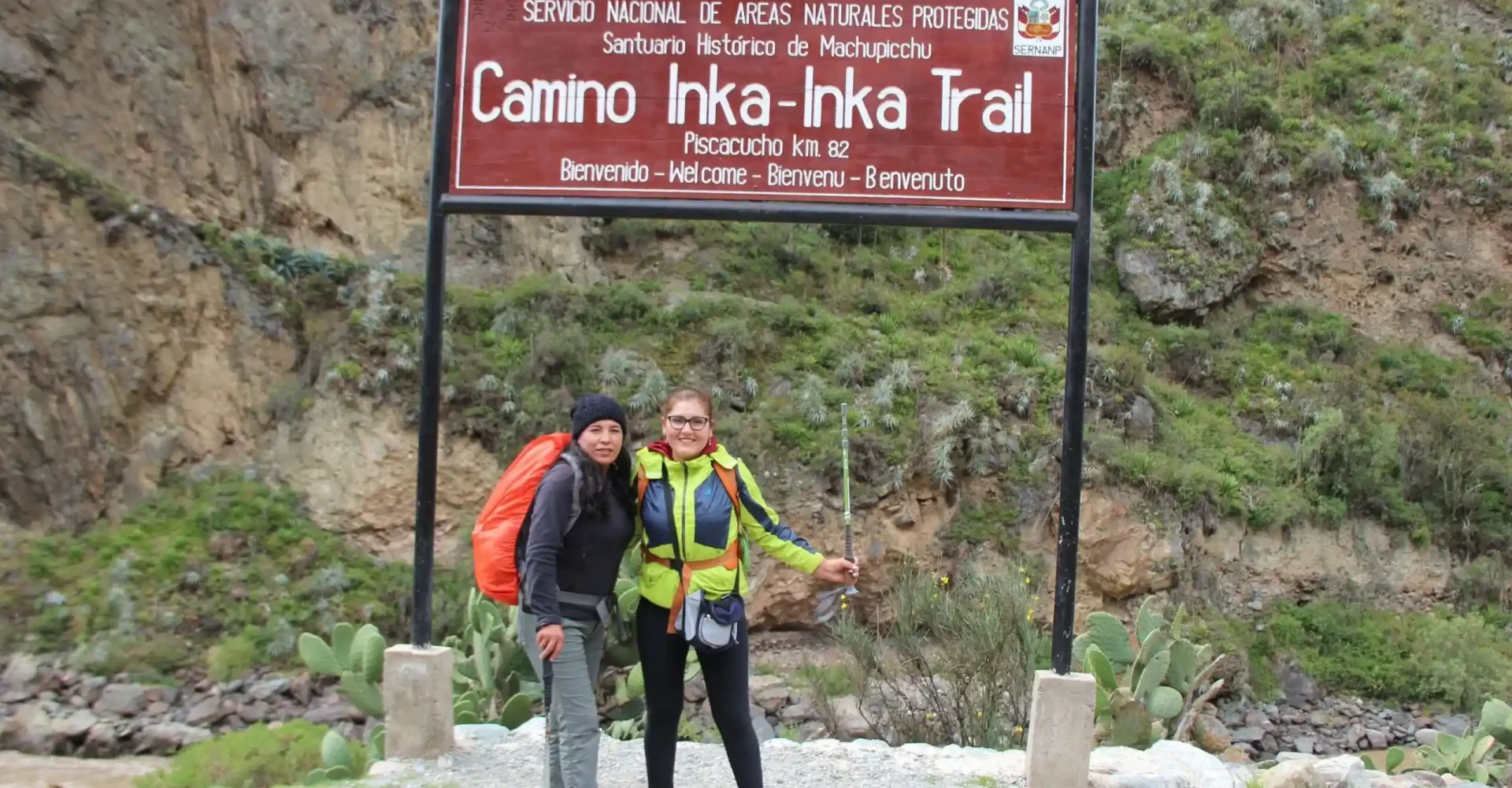
You start at Km 82 (Piscacucho), near Ollantaytambo. It is about 7 miles (11-12 km) of mostly gentle terrain with a few climbs, ending at camps such as Wayllabamba (~9,840 ft / 3,000 m). Use it to find your pace.
Day 2: the hardest day
This is the climb to Warmiwañusca, or Dead Woman’s Pass, the highest point of the trek at 13,828 ft (4,215 m). Afterward you descend to Pacaymayo (~11,800 ft / 3,600 m). Go slowly, drink water and take the breaks your guide suggests.
Day 3: the longest and most scenic
About 9 to 10 miles (15-16 km), with the Runkurakay pass (~3,950 m), Sayacmarca and Phuyupatamarca (~3,670 m). There are many downhill stone steps that tire knees and thighs. Trekking poles with rubber tips help a lot.
Day 4: Sun Gate
A short, early-morning day past Wiñay Wayna to the Sun Gate (Inti Punku, ~2,720 m) and into Machu Picchu. You will be tired, but the reward is worth it.
Altitude is the biggest challenge
Cusco sits at about 11,150 ft (3,400 m) and the highest pass reaches 4,215 m. Spend 2 days in Cusco before you start, skip alcohol the night before and tell your guide about severe headache, nausea or dizziness. More details in our guide to Machu Picchu elevation.
Who can do the Inca Trail
Healthy people of many ages hike it every year. You do not need to be an athlete, but you should be used to walking for several hours in a row. If you have heart, lung or knee problems, talk to your doctor before booking.
Porters carry the tents, food and cooking gear, so you only carry a daypack. That makes the hike much lighter.
A simple training plan
- 8 to 12 weeks out: walk 3 times a week for 45 to 60 minutes.
- Every weekend: take a long hike of 3 to 5 hours, ideally with hills.
- Stairs and climbs: practice steps to strengthen thighs and knees.
- Footwear: wear your trip boots on several hikes to prevent blisters.
- Last week: ease off, sleep well and arrive in Cusco rested.
Tips to make the trail easier
- Walk slow and steady: people who rush on day 2 pay for it later.
- Drink water all day and eat even if you are not very hungry.
- Dress in layers, because nights at the high camps are cold.
- Pack extra socks and treat hot spots on your feet at the first sign of a blister.
- Keep your daypack light.
What if the classic trail seems like too much?
There are lighter options. The Short Inca Trail takes 2 days and 1 night, with about 7.5 miles (12 km) of hiking on day one and entry through the Sun Gate. The Salkantay Trek and the Lares Trek are other alternatives.
Frequently asked questions
Is the Inca Trail hard for beginners?
It is demanding but doable for first-time hikers who prepare and acclimatize. The pace is guided and there are regular rest stops.
What is the hardest day?
Day 2, because of the climb to Dead Woman’s Pass at 13,828 ft (4,215 m). Day 3 is longer but at lower altitude.
How early should I start training?
Ideally 2 to 3 months ahead, with regular walks, hills and stairs.
Can I get altitude sickness?
Yes, even if you are fit. Spending 2 days in Cusco, drinking water and telling your guide at the first symptoms lowers the risk.
Can kids or older hikers do it?
It depends on each person’s fitness. Check with a doctor and ask the operator about minimum ages and shorter options.
At Mit Viajes, a local operator in Cusco, you hike with a guide and a full support crew. See the Inca Trail 4 Days 3 Nights tour and check availability for your dates.