Salkantay vs Inca Trail: Which Trek to Machu Picchu Is Better?
In the Salkantay vs Inca Trail debate, the short answer is this: pick the Inca Trail if you want to walk into Machu Picchu through the Sun Gate past original Inca ruins and can book months ahead. Pick Salkantay if you want big mountain scenery, missed out on Inca Trail permits, or are planning on short notice.
Quick summary
- Inca Trail: 4 days and 3 nights, about 26 miles (42 km), ending at the Sun Gate.
- Salkantay: 5 days and 4 nights (a 4-day version exists), about 43 miles (70 km), with a high pass at 15,190 ft (4,630 m).
- Permits: the Inca Trail has a daily quota and sells out months ahead; Salkantay has no quota permit.
- Machu Picchu: the Inca Trail enters through the Sun Gate on day 4; Salkantay ends in Aguas Calientes, with the visit on the last day.
- Both need 2 days of acclimatization in Cusco and solid fitness.
Side-by-side comparison
This table shows what actually changes between the two. For the full classic route, see our Inca Trail guide.
| Factor | Inca Trail | Salkantay |
|---|---|---|
| Length | 4 days, 3 nights | 5 days, 4 nights (or 4 days) |
| Distance | about 26 mi (42 km) | about 43 mi (70 km) |
| Highest point | Dead Woman’s Pass, 13,828 ft (4,215 m) | Salkantay Pass, 15,190 ft (4,630 m) |
| Permit | Quota of 500 people per day | No quota |
| Difficulty | Moderate to hard, day 2 is toughest | Moderate to hard, pass day is toughest |
| Arrival | On foot via the Sun Gate | Via Aguas Calientes, visit on last day |
| Lodging | Tents at official campsites | Varies by operator (confirm) |
What the Inca Trail is like
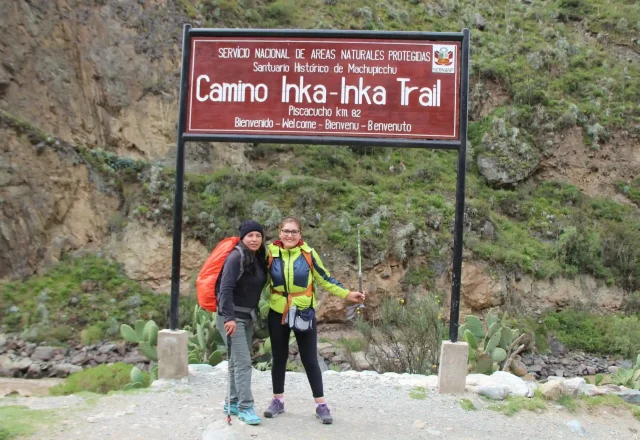
The classic route starts at Km 82 (Piscacucho), near Ollantaytambo, and follows original stone paths past Llactapata, Runkurakay, Sayacmarca, Phuyupatamarca and Wiñay Wayna. Day 2 is the hardest, climbing to Dead Woman’s Pass (Warmiwañusca) at 13,828 ft (4,215 m). Day 3 is the longest and the most scenic, with lots of stone steps downhill. On day 4 you hike before dawn to the Sun Gate (Inti Punku, about 8,900 ft or 2,720 m) for your first view of Machu Picchu from above.
The trade-off is the cap of 500 people per day, guides and porters included. Permits are in your name, tied to your passport, and the trail closes every February. If you want the Inca Trail 4 Days 3 Nights in peak season (May to September), plan 4 to 6 months ahead.
What Salkantay is like
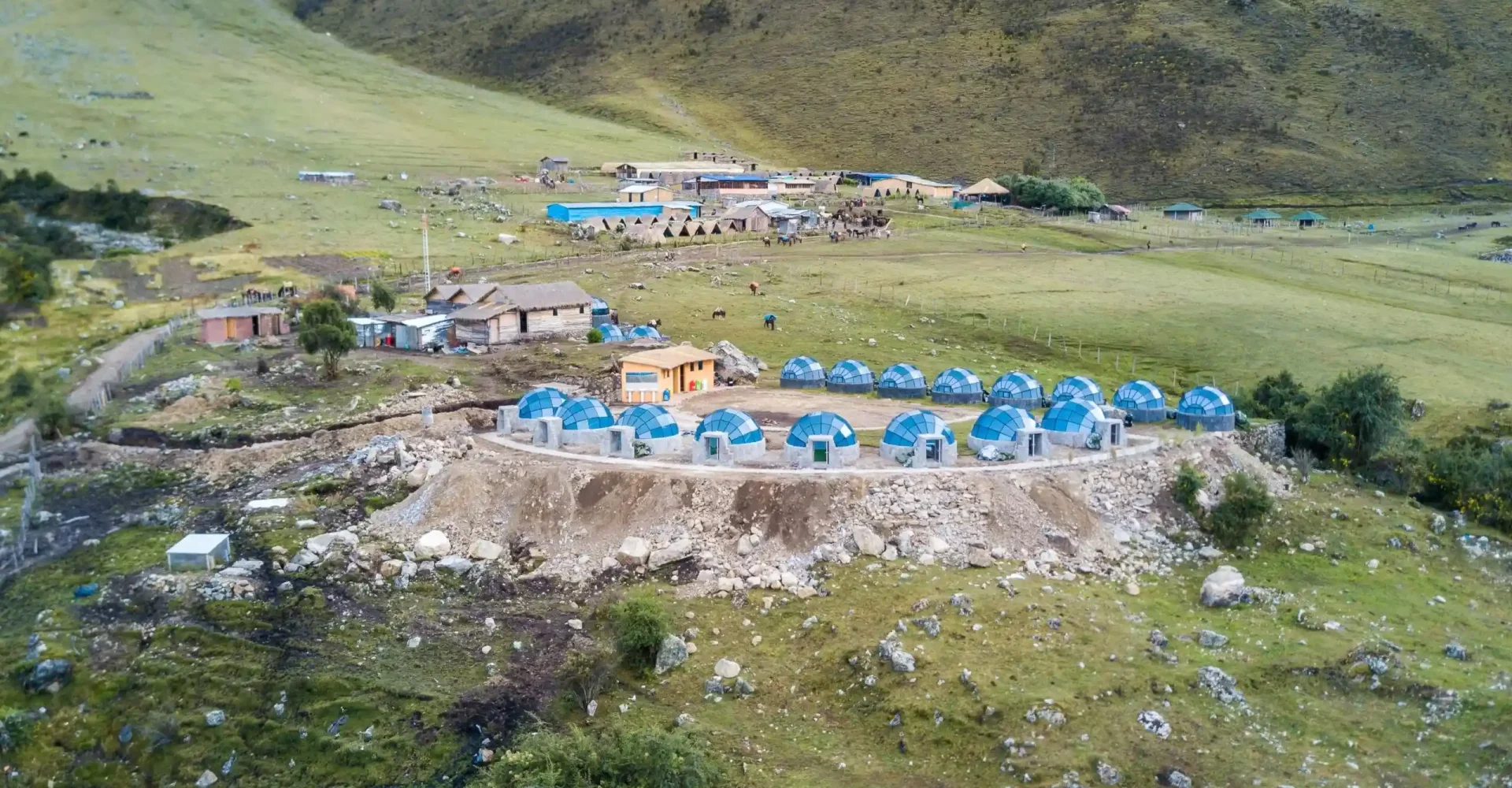
Salkantay is longer and more varied. It circles Salkantay Mountain (20,574 ft or 6,271 m), crosses a pass at about 15,190 ft (4,630 m), then drops from alpine terrain into high jungle, with a clear change in climate and plants. The route usually includes Humantay Lake (about 13,800 ft or 4,200 m). You finish in Aguas Calientes and visit Machu Picchu on the last day, with its own ticket and entry time.
Because there is no quota permit, the Salkantay Trek can be booked on shorter notice. It runs year-round, though the rainy season from December to March is tougher. See the Classic Salkantay Trek 5 Days 4 Nights.
Which trek fits you
Choose the Inca Trail if you
- want to arrive on foot through the Sun Gate, the signature moment;
- enjoy history and Inca ruins along the path;
- can lock in your trip 4 to 6 months ahead;
- prefer fewer miles, even if the steps are demanding.
Choose Salkantay if you
- prefer mountain scenery, snow peaks and a shift into jungle;
- could not get Inca Trail permits or are deciding late;
- do not mind more miles and one more day of walking;
- travel outside the rainy season or can handle unstable weather.
Want something shorter?
Other routes reach Machu Picchu in fewer days. The Short Inca Trail takes 2 days and 1 night, starts at Km 104, passes Wiñay Wayna and also enters through the Sun Gate. You sleep in a hotel in Aguas Calientes, and it has its own permit quota (about 250 per day), usually with space available closer to your dates. The Lares trek is another cultural option on the way to Machu Picchu.
Weather and altitude for both
The dry season runs April to October, with cold nights that can approach 32 °F (0 °C) at high camps. November to March is wetter. Cusco sits at about 11,150 ft (3,400 m), so spend 2 days acclimatizing before any trek. For more on the effects of height, read our guide to Machu Picchu elevation.
On both treks porters carry tents, food and cooking gear, and you carry a daypack. Trekking poles are allowed only with rubber tips.
Our take
If your dates are open and the Sun Gate is your dream, try for the Inca Trail and book early. If permits are gone or your window is tight, Salkantay delivers a serious mountain adventure with a different arrival at Machu Picchu. Mit Viajes, a local operator in Cusco, can check availability for both on your dates.
Frequently asked questions
Is Salkantay harder than the Inca Trail?
Both demand fitness. Salkantay is longer and reaches a higher pass at 15,190 ft (4,630 m). The Inca Trail is shorter but has many stone steps, and day 2 is tough. It varies by person.
Do I need a permit for Salkantay?
There is no quota permit for the trek itself, so you can book with less notice. Machu Picchu entry does require its own ticket, which your operator arranges.
Does Salkantay end at the Sun Gate?
No. It ends in Aguas Calientes, and you tour the citadel on the last day. Only the Inca Trail, classic or short, enters through the Sun Gate.
When is the best time for each trek?
The dry season, April to October, is best for both. The Inca Trail closes in February, and Salkantay is harder from December to March.
Can I hike either trek without a guide?
The classic Inca Trail cannot be done without a guide or an authorized agency. For Salkantay, we recommend a local operator for safety and logistics.
Ready to compare dates and reference prices? Ask about the Classic Salkantay Trek or check Inca Trail availability with Mit Viajes.