Inca Trail Packing List: What to Pack and What to Leave Behind
For the Inca Trail packing list, bring layered clothing, broken-in hiking boots, a rain jacket, a headlamp, sunscreen and your original passport. Tents, food and cooking gear are handled by your operator, so you only carry a daypack and, usually, a duffel bag that porters take for you.
Quick summary
- Bring your original passport, the same one used for your permit.
- Dress in layers: nights at high camps can fall close to 32 °F (0 °C) in the dry season.
- Daypack for water, rain gear, snacks, sunscreen and documents; everything else goes in the duffel.
- Trekking poles need rubber tips; the duffel weight limit varies by operator (confirm it).
- Leave extra luggage at your hotel in Cusco and skip items banned at Machu Picchu.
What your operator and porters carry
On the classic Inca Trail, a 4-day, 3-night trek, porters carry tents, food and kitchen equipment. The weight they carry is limited by law, which is why your personal duffel also has a weight cap. That limit differs between operators, so confirm it before you pack.
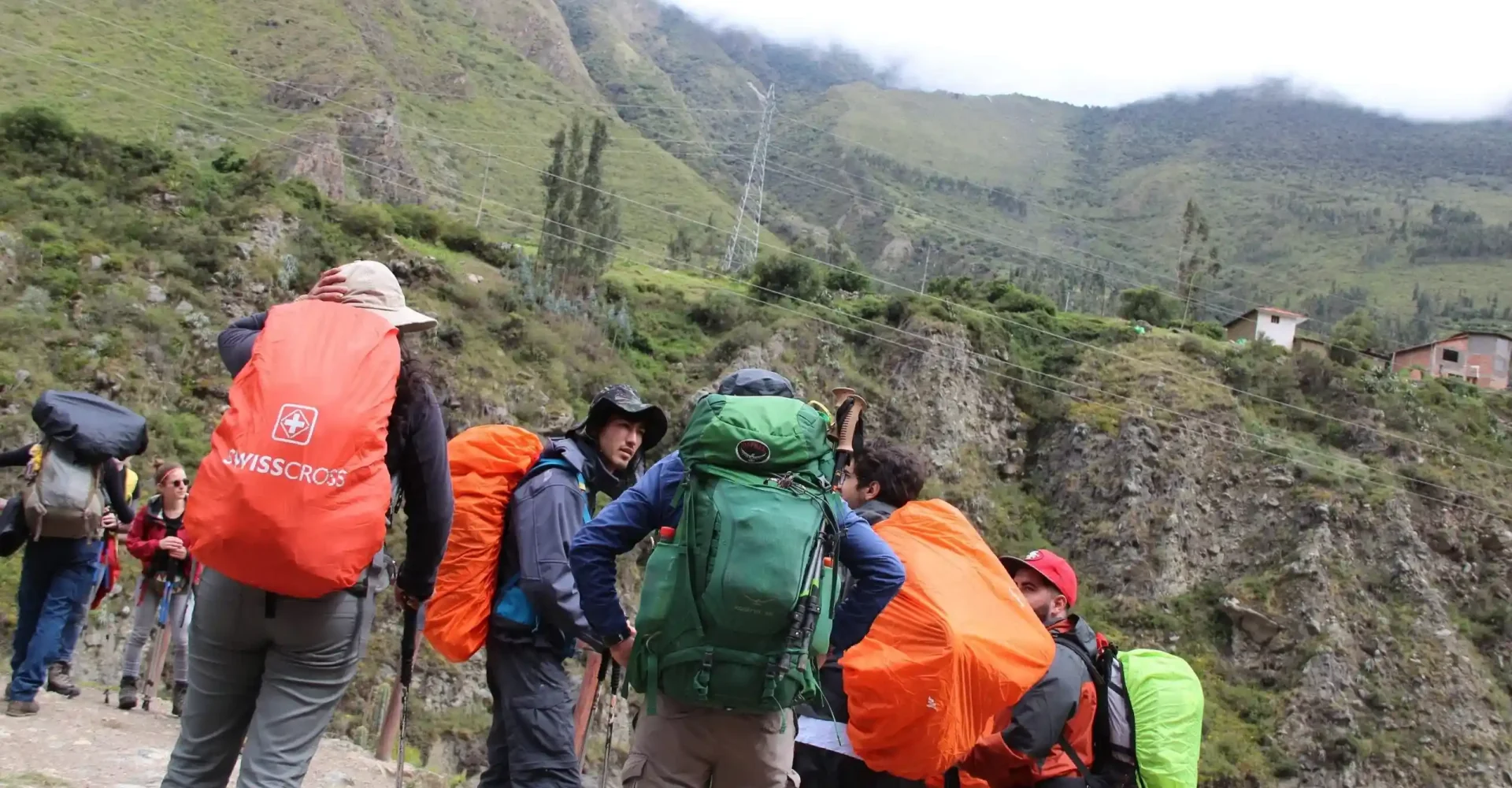
You carry only your daypack with what you need while hiking. Whatever is in the duffel is not available until you reach camp.
Documents and money
- Original passport, the same one used for your booking. If you renewed it after buying, tell your agency early. See also documents needed for Machu Picchu.
- A copy of your passport and travel insurance, ideally saved on your phone too.
- Peruvian soles in small bills for tips, restrooms and snacks before and after the trek.
Checklist by category
| Category | Bring | Where |
|---|---|---|
| Clothing | Base layers, fleece, windbreaker, hiking pants | Duffel and daypack |
| Rain | Poncho or jacket, pack cover | Daypack |
| Footwear | Broken-in boots, socks, camp sandals | Feet and duffel |
| Protection | Sunscreen, hat, sunglasses, insect repellent | Daypack |
| Gear | Headlamp, trekking poles, water bottle | Daypack |
| Hygiene | Toilet paper, wipes, hand sanitizer, personal meds | Daypack |
Clothing: think in layers
Weather can change several times in one day. The dry season (April to October) brings strong sun by day and cold nights. From November to March, expect plenty of rain. Check Machu Picchu weather by month to fine-tune your bag.
- Quick-dry shirts (avoid cotton, which stays wet).
- A thermal base layer and a fleece for evenings and the morning of day 2.
- A windbreaker and a light rain jacket.
- Hiking pants, plus shorts if you like for the lower sections.
- A beanie and thin gloves: Dead Woman’s Pass sits at 13,828 ft (4,215 m).
- Dry, clean clothes just for sleeping, kept in a plastic bag.
Footwear and gear
Wear broken-in hiking boots with a firm sole. There are many stone steps going downhill, especially on day 3. Never debut new boots on the trail. Pack extra socks and sandals to rest your feet at camp.
- A headlamp with spare batteries for pre-dawn starts.
- Trekking poles, rubber tips only.
- A reusable water bottle; crews usually provide boiled water at camp.
- Sleeping bag and sleeping pad: many operators rent them, so ask what is included.
- A power bank, since there are no outlets on the trail.
What not to bring
- Extra clothes, heavy electronics and luxury items: the duffel limit is real.
- Trekking poles without rubber tips.
- Drones and other items banned at Machu Picchu; see what to pack for Machu Picchu.
- Hard suitcases and large luggage: leave them at your hotel in Cusco.
Tips for packing the duffel and daypack
- Pack each day’s clothes in plastic bags or dry sacks, so if it rains, what is in the duffel stays dry.
- Keep everything you will need before reaching camp in the daypack: rain gear, jacket, snacks, sunscreen and toilet paper.
- Choose light pieces that mix and match instead of a different outfit for every day.
- Bring few toiletries and personal meds, such as pain relievers and blister bandages.
- The night before departure, weigh your duffel and check the limit your operator gave you.
Prepare your body before your bag
Packing is the easy part. Arrive in Cusco (about 11,150 ft, or 3,400 m) with at least 2 days to acclimatize, and read our guide on Machu Picchu elevation and altitude sickness. If classic permits are sold out, the Short Inca Trail needs a much smaller bag.
Frequently asked questions
What size daypack should I bring?
A pack of roughly 20 to 30 liters is usually enough for water, rain gear, snacks, sunscreen, a camera and documents. Look for comfortable hip straps.
Can I rent a sleeping bag and trekking poles?
Many operators rent sleeping bags, pads and poles. Ask at booking what is included so you do not carry gear you do not need.
How much weight can I put in the duffel?
The limit varies by operator because porter loads are regulated by law. Confirm the exact figure before you travel and leave extras at your hotel.
Do I need my original passport?
Yes. The permit is named and tied to your passport, and the checkpoint compares the original document with your booking. Copies do not replace it.
Are there outlets or cell service on the trail?
There are no outlets at camp and signal is patchy. Bring a power bank and download maps and documents before leaving Cusco.
Want to hike without worrying about tents, food or permits? Take a look at our Inca Trail 4 Days 3 Nights tour and contact Mit Viajes, a local operator in Cusco, for the included gear list and current availability.