What Is Machu Picchu? History, Who Built It and Why It Matters
What is Machu Picchu? It is a stone Inca citadel built around the mid-15th century in the Peruvian Andes, at 2,430 meters (about 7,970 feet) above sea level in the Cusco region. Machu Picchu’s history points to the Inca ruler Pachacuti, who is believed to have ordered it as a royal estate and sanctuary; it was abandoned in the 16th century and only became widely known in 1911.
Quick summary
- What it is: an Inca citadel with agricultural and urban sectors, temples and terraces.
- Who built it: the Incas, around the 15th century, attributed to the ruler Pachacuti.
- Abandonment: in the 16th century, after the Spanish conquest, which never found it.
- Global fame: Hiram Bingham brought it to world attention in 1911, led by local farmers.
- Today: a UNESCO World Heritage Site (1983) and one of the New Seven Wonders of the World (2007).
What Machu Picchu is and where it is
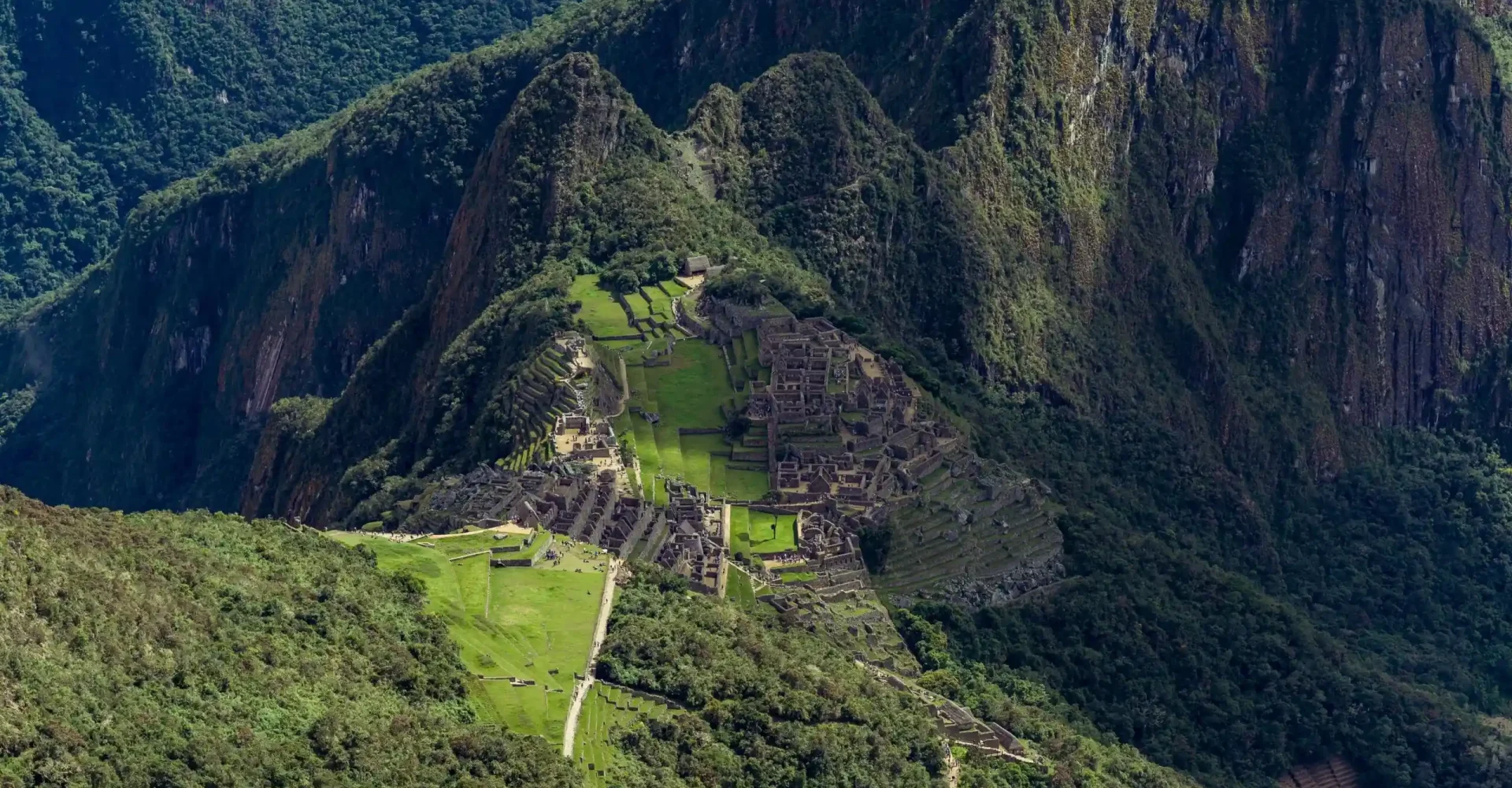
Machu Picchu sits in the Cusco region of southern Peru, above the Urubamba River valley. The citadel occupies a ridge between two peaks: Machu Picchu, which means “old mountain” in Quechua, and Huayna Picchu, the “young mountain.” That is where the site gets its name.
The complex is a Historic Sanctuary, listed by UNESCO as a mixed World Heritage Site, meaning both cultural and natural, because it combines Inca architecture with a cloud forest landscape. If you are starting to plan your trip, our Machu Picchu travel guide walks you through every step.
Who built Machu Picchu
The Incas built Machu Picchu. Historical tradition attributes it to the Inca ruler Pachacuti (Pachacútec), who expanded the empire from Cusco. Scholars believe the citadel worked as a royal estate and religious sanctuary rather than an ordinary town.
The builders cut stone without mortar: blocks were shaped to fit together precisely, a technique that helps the walls withstand the region’s earthquakes. They also built a careful drainage system, essential in a place with heavy rain and steep slopes.
What was Machu Picchu used for?
Researchers suggest it served as a retreat for the ruler and a ceremonial center tied to the worship of the Sun and sacred mountains. The agricultural terraces held up the hillside and made it possible to farm on sloping ground. The exact use of each space is still debated, since the Incas left no written records.
Main structures
The citadel is divided into an agricultural sector, with the terraces, and an urban sector, with temples, plazas and living areas. These are the highlights:
| Structure | What it is |
|---|---|
| Temple of the Sun | Curved, finely cut stone building |
| Intihuatana | Ritual stone linked to the Sun |
| Temple of the Three Windows | Wall with three large openings |
| Temple of the Condor | Rocks shaped like a bird |
| Sacred Plaza | Central ceremonial space |
| Agricultural terraces | Farming steps on the slope |
Quick timeline
| Period | Event |
|---|---|
| 15th century | Built, attributed to Pachacuti |
| 16th century | Abandoned after the Spanish conquest |
| 1911 | Hiram Bingham brings it to the world |
| 1983 | UNESCO World Heritage Site |
| 2007 | One of the New Seven Wonders |
Abandonment and the 1911 “discovery”
In the 16th century, with the arrival of the Spanish and the collapse of the Inca Empire, the citadel was abandoned. The conquistadors never found it, which helps explain why it stayed so well preserved, hidden by vegetation.
In 1911, the American explorer Hiram Bingham reached the site guided by local farmers, among them Melchor Arteaga. In fact, farming families were already living and growing crops there, so calling it a “discovery” in the strict sense is not accurate. Bingham is the one who publicized the site internationally.
Why Machu Picchu matters
Machu Picchu shows how the Incas mastered engineering on difficult terrain: they built on a narrow ridge, leveled slopes with terraces and managed water with channels and drains. Every detail reveals how well they knew the mountain, the climate and the sky.
The site also helps explain the Andean worldview. Several structures align with the Sun and with the sacred peaks around it, and the location itself, between the valley and the forest, carried symbolic weight. That is why the citadel is read today not just as ruins, but as a sacred landscape.
For visitors, knowing this history changes the experience: instead of only photographing stones, you recognize what each sector meant and why the place was chosen.
Machu Picchu today
Access is now controlled: visits follow set circuits and time slots to protect the citadel. Before you travel, it helps to understand how the Machu Picchu circuits work and how to buy your tickets. If you want an extra climb, see our Huayna Picchu guide.
- See how to get to Machu Picchu from Cusco.
- Pick your dates with the guide to the best time to visit.
- Keep the 2,430 m (7,970 ft) altitude in mind and give your body time to adjust.
Frequently asked questions
What is Machu Picchu in a few words?
It is a 15th-century Inca stone citadel in the Peruvian Andes, most likely used as a royal estate and sanctuary.
Who built Machu Picchu?
The Incas built it, and the construction is usually attributed to the ruler Pachacuti, around the mid-15th century.
Was Machu Picchu really discovered in 1911?
Not exactly. Hiram Bingham made it known to the world in 1911, but local farmers already knew it and families were living on the site.
Why was Machu Picchu abandoned?
It was abandoned in the 16th century, after the Spanish conquest. The Spanish never found it, and the exact reasons for the abandonment are still studied.
Is Machu Picchu a UNESCO World Heritage Site?
Yes, since 1983, as a mixed cultural and natural site. It was also named one of the New Seven Wonders of the World in 2007.
Want to see the citadel with a guide who tells this story on site? Take a look at the Machu Picchu 2 Days 1 Night tour from Mit Viajes, from US$ 350, or contact our team to build the right itinerary.